

2025 Toyota RAV4 vs 2025 Honda CR-V — Which AWD works best for Boise, ID?
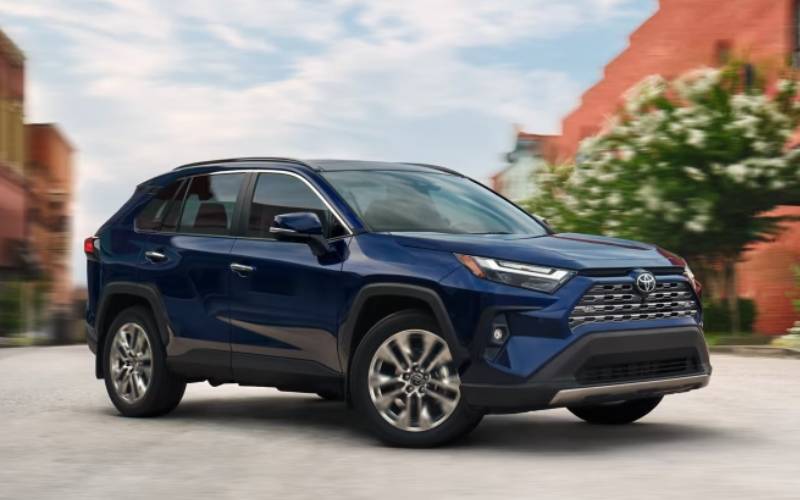
Edmark Toyota – 2025 Toyota RAV4 vs 2025 Honda CR-V — Which AWD works best for Boise, ID?
All-wheel drive is one of the most common deciding factors for compact SUV shoppers who split time between city streets and mountain passes. If you are comparing the 2025 Toyota RAV4 and the 2025 Honda CR-V for winter traction, gravel-road confidence, and year-round versatility, the differences come down to how each brand engineers traction and control. Toyota equips RAV4 with two AWD approaches tailored to how you drive—Electronic On-Demand All-Wheel Drive standard on hybrid grades and available Dynamic Torque Vectoring All-Wheel Drive with Rear Driveline Disconnect on select gas models. Honda offers Real Time AWD™ across the CR-V lineup, with the hybrid Sport Touring Hybrid making AWD standard. Both systems are capable in rain and light snow, but the Toyota hardware goes a step further with features designed to help when conditions are unpredictable and surfaces are inconsistent.
What does that mean for everyday life in and around Boise’s four seasons? RAV4’s available Multi-Terrain Select lets you choose MUD & SAND, ROCK & DIRT, or SNOW, each calibrating throttle, transmission mapping, and wheel-slip logic for traction you can feel. The CR-V provides helpful drive modes, including Snow on select trims, but does not layer in torque vectoring that can apportion power side-to-side across the rear axle. That difference becomes apparent when you pull onto a rutted shoulder, navigate a loose boat ramp, or climb a steep, uneven driveway. Add RAV4’s higher available ground clearance and the simple confidence of a traditional 8-speed automatic on gas models, and you get an SUV that blends surefootedness with refined road manners. For drivers who want a hybrid, RAV4 Hybrid pairs its efficient powertrain with standard Electronic On-Demand All-Wheel Drive, bringing immediate electric-motor torque to the rear wheels when slip is detected.
- AWD availability: RAV4 offers torque-vectoring AWD on select gas trims and standard AWD on hybrid trims; CR-V offers AWD across the lineup with standard AWD limited to its Sport Touring Hybrid.
- Terrain calibration: RAV4’s Multi-Terrain Select adds MUD & SAND, ROCK & DIRT, and SNOW modes; CR-V provides Snow mode on select trims without terrain-specific programming.
- Traction strategy: RAV4 can route torque side-to-side across the rear axle; CR-V focuses on front-to-rear torque distribution.
- Ground clearance: RAV4 offers higher available clearance for snow ruts and trailheads; CR-V is tuned more for paved-road ride comfort.
- Driver confidence: RAV4 layers chassis control with intuitive modes for variable surfaces; CR-V maintains predictable traction for everyday weather.
For many shoppers, the next question is whether these AWD differences change on-road refinement. In short, both vehicles are composed and quiet at speed; each uses a rigid platform with a multi-link rear suspension to smooth out rough patches. Where RAV4 distinguishes itself is how seamlessly AWD and drive modes integrate with safety and driver-assist systems—Toyota Safety Sense 2.5 works hand-in-glove with traction and stability controls to maintain your intended path. CR-V’s Honda Sensing® suite is comprehensive as well, featuring Adaptive Cruise Control with Low-Speed Follow and Lane Keeping Assist System. If your daily routine includes early morning ski runs, gravel parking lots, and spring rain, RAV4’s torque-vectoring option and terrain programming simply give you more tools.
Edmark Toyota is serving Meridian, Nampa, and Boise with test routes that help you feel these differences firsthand. We can set up back-to-back drives on mixed surfaces and review how each AWD system responds to common scenarios—climbing slick grades, starting on uneven shoulders, or easing down a long, wet descent. Our team provides clear explanations, from how Rear Driveline Disconnect improves efficiency on dry days to why side-to-side torque transfer helps the vehicle rotate naturally through winter corners. If you are comparing trims, we will also walk through practical features that complement AWD, including available all-weather floor liners, roof-mounted accessories, and cargo-area organization that supports weekend gear.
Frequently Asked Questions:
Does torque-vectoring AWD make a difference in everyday driving?
Yes. Torque vectoring helps the vehicle turn more naturally by sending extra torque to the outside rear wheel in a corner, improving stability on slick roads and reducing understeer when you accelerate out of turns.
Is terrain-select software useful if I mostly drive on pavement?
It is. Even if most miles are on-road, SNOW mode can soften throttle inputs and adjust slip thresholds for smoother launches on frosty mornings, while other modes help when you encounter gravel lots, boat ramps, or unplowed side streets.
0 comment(s) so far on 2025 Toyota RAV4 vs 2025 Honda CR-V — Which AWD works best for Boise, ID?