

How the 2026 Toyota Tundra’s Multi-Link Rear Suspension Smooths Daily Driving around Meridian, ID
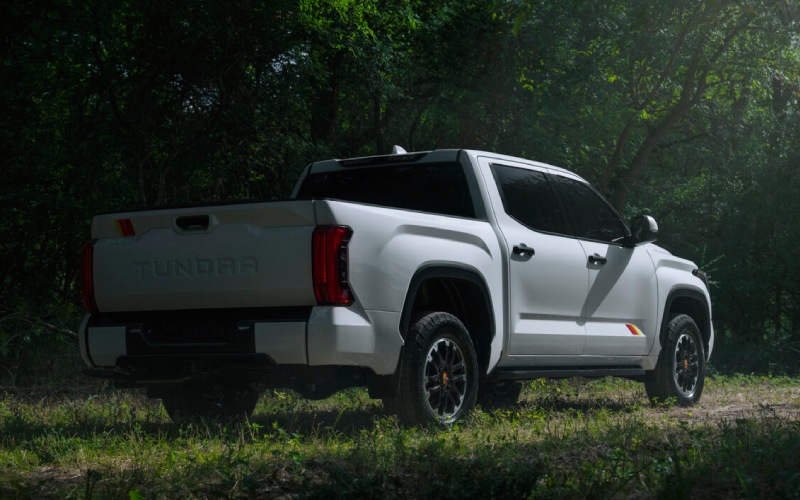
Edmark Toyota – How the 2026 Toyota Tundra’s Multi-Link Rear Suspension Smooths Daily Driving around Meridian, ID
The moment you leave the driveway in a full-size truck, your ride quality and suspension design start to matter—especially in and around Meridian, ID, where a single trip can include fresh pavement, patched sections, and a few miles of gravel to a job site. The 2026 Toyota Tundra’s multi-link coil-spring rear suspension is engineered to do something many truck owners wish for but rarely get: ride comfort and towing stability in one package. This blog breaks down what that means for everyday driving, what you will feel behind the wheel, and how it helps whether you are cruising I-84, navigating Eagle Road traffic, or easing down a rutted access lane to load materials.
Traditional half-ton pickups have relied on rear leaf springs for decades because they are simple and robust for hauling. Tundra takes a more modern route by pairing a strong frame with a multi-link coil-spring rear design. The geometry helps the rear axle track cleanly over bumps and transitions, while the coil springs themselves deliver a more progressive response to impacts. In plain terms, the rear of the truck is less likely to hop or skitter over broken pavement. The benefit becomes obvious when the bed is empty—exactly when some trucks feel the most jittery. In Tundra, that empty-bed ride is noticeably more composed.
What You Feel from the Driver’s Seat
On Meridian-area streets, the first difference you will notice is how settled the truck feels over expansion joints and patched surfaces. Where a traditional leaf-spring setup can transmit a hard thunk into the cabin, Tundra’s coil springs round off the edge of the impact. Over a series of bumps, the chassis settles rather than porpoises. This calmer motion also helps the front end stay more planted, which lends the steering a more reassuring, precise feel. Even lane changes on I-84 with a crosswind can feel less dramatic because the rear of the truck is not reacting as sharply to minor inputs.
Now add a trailer to the equation. When you hitch up and set the Integrated Trailer Brake Controller, the multi-link geometry and coil tuning really start to shine. With weight on the hitch, Tundra resists that squatting, bouncy sensation some drivers fight on uneven pavement. The result is less see-saw motion in the cabin and a more predictable sense of how the trailer is behaving. Combine that planted feel with available Trailer Backup Guide with Straight Path Assist and an available Panoramic View Monitor, and backing toward a storage pad or boat slip gets easier—and less stressful to do solo.
Why It Matters for Mixed-Surface Drives
Meridian drivers often split time between smooth suburban roads and older farm-to-market or canal routes that can turn to washboard quickly. Coil springs excel here because they compress and rebound more progressively over small, rapid-fire bumps. Instead of the rear of the truck chattering, you get a calmer response with less lateral hop. The benefit extends to cargo security—fewer abrupt body motions can reduce shifting loads in the bed, especially when paired with Tundra’s aluminum-reinforced composite bed that resists dents and corrosion.
Unloaded comfort is only part of the story. If you regularly haul landscaping materials, lumber, or gear, the multi-link design distributes forces across several suspension links rather than asking a single leaf pack to manage everything. That gives engineers more tuning levers—spring rates, bushing durometers, link geometry—so the truck can be both stout under load and calm when empty. The engineering takeaway is simple: the 2026 Tundra strives for one ride and handling personality you can live with seven days a week, not two personalities you have to tolerate depending on payload.
How Tech Complements the Suspension
A smoother suspension sets the stage for smarter tech to shine. The available 12.3-in. digital gauge cluster lets you keep an eye on towing or off-road functions without hunting through menus. The available 14-in. Toyota Audio Multimedia touchscreen gives you big, easy-to-use tiles for navigation and settings, and the available Panoramic View Monitor adds clarity when you need that 360-degree look around a job site, tight driveway, or trailhead parking spot. Tundra’s available Trailer Backup Guide with Straight Path Assist is another layer of confidence—when the truck’s rear stays calmer thanks to the suspension, the camera views and trailer guidance tend to feel more fluid and predictable too.
Where the suspension meets the road, tires matter. If you are eyeing an off-road-focused grade or the TRD Off-Road Package, you will get additional suspension tuning and hardware aimed at traction and control away from pavement. Pairing that with the multi-link rear means you are not giving up daily comfort to gain trail capability. For many drivers, that balance—usable, every-mile composure matched with real capability—defines what a modern full-size truck should deliver.
Everyday Advantages Around Meridian
Consider three common scenarios. One: the work commute on I-84. With the multi-link rear, the ride feels more composed over long overpass joints. Two: stop-and-go traffic on Eagle Road. The calmer rear axle motion helps the truck settle between light cycles, so passengers are not rocked with every short stop. Three: a weekend run to Lake Lowell or a gravel lane near Kuna. The coil-spring progressiveness helps cushion those washboard stretches, so you arrive carrying on a conversation rather than bracing over every ripple. None of these scenarios are dramatic, but when combined, they are the difference between a truck you love to drive and one you merely tolerate.
- Ride comfort: Coil-spring tuning smooths sharp impacts and chatter
- Towing poise: Multi-link geometry supports confidence with a loaded hitch
- Bed stability: Calmer body motions help keep cargo from shifting
- All-surface ease: Works on city streets, highways, and gravel lanes
It is also worth noting how the suspension complements Tundra’s available i-FORCE MAX twin-turbo V6 hybrid. Instant torque can reveal a suspension’s weaknesses if body control is not dialed in. In Tundra, that surge translates cleanly to forward motion without excessive squat or wheel hop, so you get the benefit—swift acceleration for merging and passing—without a penalty in composure.
Frequently Asked Questions:
Does the 2026 Toyota Tundra’s coil-spring rear suspension reduce towing capacity?
No. Tundra is engineered to handle serious towing, with a maximum capacity of up to 12,000 lbs. The multi-link coil-spring design is tuned to support both ride quality and towing stability, not trade one for the other.
How does the suspension feel when the bed is empty?
That is where many drivers notice the biggest improvement. Over small, frequent bumps or patched surfaces, the rear of the truck stays calmer, so the cabin motion feels more settled and controlled.
Will I still benefit if I choose an off-road-focused Tundra?
Yes. TRD-focused grades and packages pair the multi-link rear with specific tuning and hardware for trail use, while retaining the day-to-day composure that makes Tundra easy to live with in town.
In short, the 2026 Tundra’s multi-link coil-spring rear suspension does more than check a box on a spec sheet. It shapes how the truck feels mile after mile—empty or loaded, on the highway or on a gravel lane—so your daily routine around Meridian is easier and your weekends are more enjoyable. If you are comparing trucks and ride quality ranks high on your checklist, this is one feature that deserves a real-world test drive to feel the difference for yourself with Edmark Toyota, serving Nampa, Boise, and Meridian. Our team is happy to help you explore the suspension tuning across trims and show how Tundra’s trailering and camera tech complement the composed foundation underneath.
0 comment(s) so far on How the 2026 Toyota Tundra’s Multi-Link Rear Suspension Smooths Daily Driving around Meridian, ID